Wednesday, November 23, 2022

 Omicron and Animals


It’s been a pretty chaotic week in the zoonotic SARS-CoV-2 world, with a lot of attention being paid to hamsters in Hong Kong and deer in Canada.

However, one issue that’s gotten less attention is the need to keep up with this virus as it changes, through serial waves and new variants, and to remember the limitations of our knowledge. I do a lot of talks and interviews about SARS-CoV-2 and often get into discussions of which species are susceptible and which ones aren’t, but there are always some important disclaimers I try to include. One big one is “but, what we know about SARS-CoV-2 in animals almost all pre-dates Omicron. Most of it pre-dates Delta, and even Alpha.”

Why is that important?

If we look at what we know about SARS-CoV-2 in some species, it’s based on experimental models, where animals were deliberately infected using the virus strain that was available at the time. Through those studies, we’ve concluded that species such as cattle and pigs are poorly susceptible, and SARS-CoV-2 exposure of such livestock is unlikely to be of relevance for either human or animal health (though people should still avoid contact even with these animals if they’re sick). Most of those studies were done with the original (pre-variant) SARS-CoV-2 strain. They were really important studies, but the virus strains that were used aren’t relevant anymore. The concern is that it can lead us to say “We’re good here – we don’t need to worry about that species, so we won’t do any more surveillance or future studies”.

Does that matter?

Maybe. The major SARS-CoV-2 variants like Delta and Omicron behave very differently in people from the original strain, and in most cases we don’t know if the same is true in animals or not.  It’s a risky approach to assume they won’t behave differently in animals as well.

Can new variants behave differently in animals?

Yes, and susceptibility to variants can be affected both ways. Earlier in the pandemic, it was shown that a species of mice that wasn’t susceptible to the original SARS-CoV-2 strain was susceptible to the Beta and Gamma variants.  They then showed that the same didn’t apply to Delta.

More recently, reduced susceptibility to Omicron was reported in mice and hamsters. A study from a few days ago reported that Omicron doesn’t readily infect Syrian hamsters, a species that is susceptible to other strains.

These studies show the need to investigate the impact of each variant on each species.

None of this is meant to say that the sky is falling and we’re going to see a massive change in species susceptibility or emergence of new animal issues with SARS-CoV-2. However, it means that we can’t be over-confident based on what’s been seen in the past.  We have to remember the limitations of our knowledge and make sure that we try to keep up with changes in this virus rather than rely on outdated information.

We need to keep working to identify (and ideally head off) issues, rather than using the typical reactionary approach, where we wait until there’s clear evidence of a problem before we act. The need for more work includes a range of studies (field and experimental) and species (including some species that haven’t been investigated since those very early studies). It also requires motivation and financial support, which has been lacking in most areas.  The amount of funding I’ve had for SARS-CoV-2 surveillance is basically the equivalent to a few remdesivir treatment courses. We’ve gotten good stuff done, but it’s on a shoestring budget and with little coordinating assistance, unlike some other jurisdictions where public health has integrated animal surveillance studies into their COVID-19 response plans, which is really the way to go.

We’re still at a time when SARS-CoV-2 is screaming through the human population, but that stage will end. Eventually we’ll reach a point where the biggest pool of potentially susceptible individuals is animals, and the relevance of animal reservoirs and animal populations as sources of variants will increase. We’re better off figuring out the issues now (as much as we can) rather than continuing to try to play catch-up later.


Visit: https://veterinary-conferences.pencis.com/


Veterinary Medicine Companies in India 


Veterinary Medicine Companies in India 

 We all are living in a modern world but somewhere, we are still dependent on the animal for resources like eggs, milk, meat etc. A large proportion of the population is into cattle rearing. It is the most common practice in India, especially opts by people in villages or rural areas. The heath of Animal directly impacts human health due to the consumption of resources drawn by animals. There are many Top Veterinary Medicine Companies in India,  who are formulating such medicines to treat the health condition of Animals.

Animals health cannot be avoided as it impacts human health too. People, who are into cattle rearing performing the toughest job ever. They always provide them with all the essential nutrition, animal protein, and other essential elements to ensure their good health.  Lots of companies, who are under the list of Top 10 veterinary company in India 2021. They are currently playing a major role in the Animal Health industry through their regular supply of quality DCGI Approved. In this article, you will get to know the list of  Top Veterinary Medicine Companies in India, who are open to providing their medicines on bulk quantity rates. 

A Growing Market of Veterinary Medicine Range 

The Animal Healthcare sector is estimated to represent a global market of $32 billion as according to the research. There are many major factors which are affecting the growth of Veterinary medicine, injections, and others such as:

  • The first reason is its increasing urbanization rising per capita income in emerging markets.
  • Due to the limited farmland ana d cattle rearing in urban areas.
  • Increasing modernization and more utility of chemicals extracts and other harmful elements.
  • Less interest in animal ownership and growing pollution that affects the respiratory system of the animal.

Sometimes due to the presence of many harmful agents like Parasites, Microbes, Viruses, Bacteria, fungi, Protozoa etc, Animals fells sick. In such a case, their caretakers opt the Veterinary product, medicines, and equipment to treat them. Thus, Veterinary Medicine Companies in India are playing a vital role in giving a direction to Animal Healthcare Industry.


Visit: https://veterinary-conferences.pencis.com/

Friday, November 18, 2022

 New treatment for animal cancer


A new software program could help veterinary oncologists target cancer cells more accurately.

Three-dimensional (3D) treatment planning can be used to target cancerous cells in animals — one in four dogs will develop tumours at some stage in their life. The software configures a 3D view of the tumour, allowing radiation oncologists to accurately target the cancerous cells and not harm the surrounding healthy tissue. This will reduce toxicity and improve the destruction of cancerous cells.

The software is a giant leap forward in oncology treatment for animals in Australia, according to Dr Rod Straw, founder of Brisbane Veterinary Specialist Centre (BVSC) and a leading veterinary specialist. BVSC is the first veterinary provider in Australia to use 3D treatment planning to target cancer in animals.

“This software will dramatically close the gap between oncology treatments on offer to humans, and those available to our pets,” Straw said in a statement. “We will now be able to marry the CT images with the radiation treatment delivered by our linear accelerator.”

Straw recently diagnosed Cocoa, an 11-year-old female Border Collie, with nasal cancer. The technology connected the CT scanner at BVSC to the powerful 3D planner and produced a radiation plan for Cocoa that could not have been calculated using previous methods.

Straw predicts an optimistic outcome from Cocoa’s radiation therapy. “This is a breakthrough in our ability to treat animals with cancers like brain tumours, intranasal cancer and other deep seated cancers we could not previously treat accurately,” he said.

“Our 3D planner has been tailored to our linear accelerator by expert physicists from Premion ensuring the same accuracy expected when treating human cancers.”

Website Link: https://veterinary-conferences.pencis.com/

Abstract Submission - https://x-i.me/ajiver1

Conference Registration - https://x-i.me/vecreg10

Award Registration - https://x-i.me/awvereg2

Award Nomination - https://x-i.me/nomvera11

Member Nomination - https://x-i.me/vertmem12


#veterinary#veterinarymedicine#veterinaryconference#science#dog#vet#veterinarian#veterinarydisease#internationalconference

 Animal Cell

Definition

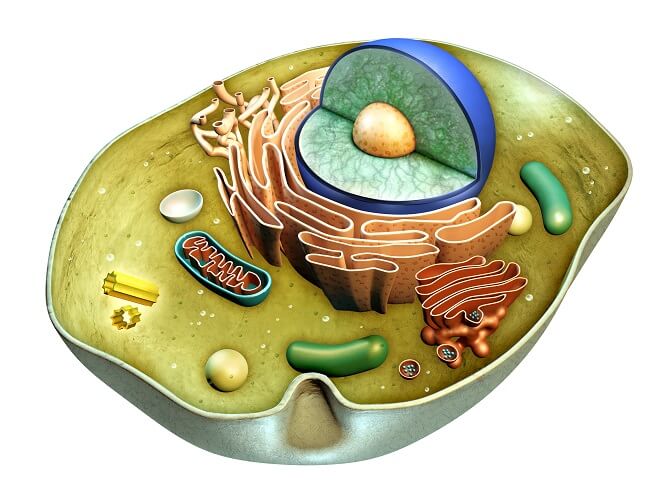
Animal cells are the basic unit of life in organisms of the kingdom Animalia. They are eukaryotic cells, meaning that they have a true nucleus and specialized structures called organelles that carry out different functions. Animal cells do not have plant-specific organelles like cell walls, which support the plant cell, or chloroplasts, the organelle that carries out photosynthesis.

Overview of Animal Cells

Animals, plants, fungi, and protists are all made up of at least one eukaryotic cell. In contrast, bacteria and archaea are made up of a single prokaryotic cell.

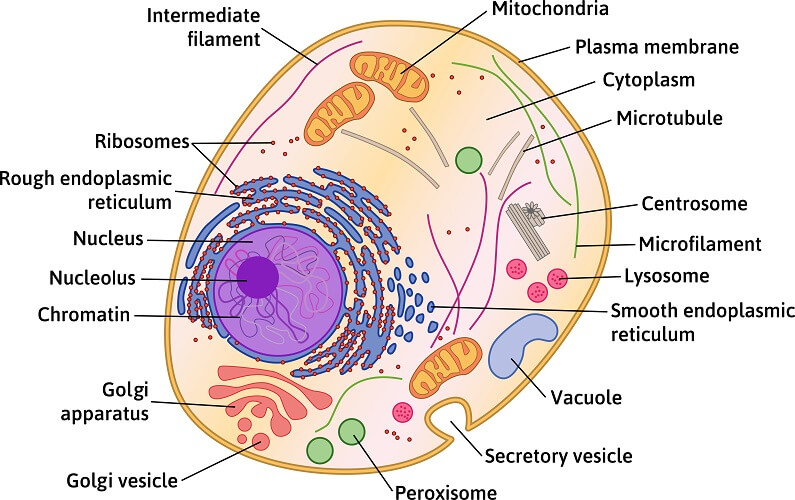
All cells are surrounded by a cell membrane (also called a plasma membrane). The cell membrane is the boundary that separates the inside of the cell from the outside of the cell. The plasma membrane encloses all the cell components, which are suspended in a gel-like fluid called the cytoplasm. The cytoplasm is the location of the organelles.

Eukaryotic cells are distinguished from prokaryotic cells by the presence of a defined nucleus and other membrane-bound organelles, such as the mitochondria, endoplasmic reticulum, and Golgi apparatus. Prokaryotic cells do not have a defined nucleus (instead, a region of the cytoplasm – called the nucleotide – holds the genetic material). They also lack membrane-bound organelles.

Animals are all multicellular, meaning multiple cells work together to form the whole organism. In complex organisms, such as humans, these cells can be highly specialized to perform different functions. As such, they often look and function very differently from one another, even though they are all human cells.


Animal Cells vs. Plant Cells

Animal cells and plant cells are both eukaryotic. Thus, they both have a defined nucleus and other membrane-bound organelles. However, animal and plant cells also have some fundamental differences.

Animal cells, unlike plant and fungi cells, do not have a cell wall. Instead, multicellular animals have other structures that provide support to their tissues and organs, such as skeleton and cartilage. Additionally, animal cells also lack chloroplasts found in plant cells. Chloroplasts are specialized organelles that trap energy from the sun and use it as fuel to produce sugars in a process called photosynthesis.

Additionally, while plant cells tend to have a large, central vacuole, animal cells lack this feature. Some animal cells do have small vacuoles, but their function is to assist in the storage and transport of large molecules.

Animal Cell Structure

Animal cells have a variety of different organelles that work together to allow the cell to perform its functions. Each cell can be thought of as a large factory with many departments, like manufacturing, packaging, shipping, and accounting. Different organelles represent each of these departments.

There are lots of different animal cells that each carry out specialized functions. Therefore, not every animal cell has all types of organelles, but in general, animal cells do contain most (if not all) of the following organelles. Additionally, some organelles will be highly abundant in certain cells and not others.


Visit: https://veterinary-conferences.pencis.com/


LEPTOSPIROSIS


Leptospirosis is a bacterial infection of the liver and kidneys spread by the urine of dogs, coyotes, raccoons, skunks, and rodents. It is contracted by ingesting water contaminated with such urine. Humans can contract leptospirosis, as well, if they come in contact with the urine of an infected animal.

The leptospirosis vaccine has gotten a bad wrap over the years. Many breeders will tell you that their beloved breed is “especially sensitive” to the leptospirosis vaccine. Old ways of producing that vaccine led to some truth of that. Today’s leptospirosis vaccine is exceedingly safe. Any animal can be allergic to anything, including the leptospirosis vaccine. That being said, leptospirosis is deadly, contagious to humans, and present in the upstate of South Carolina.

You don’t have to go out in the woods or live on a farm to be at risk, either. Mice and rats can spread leptospirosis into rainwater puddles that dogs taste or lick off of their feet. A common first symptom of leptospirosis in dogs is increased and inappropriate urination which owner clean up, thereby exposing themselves.

For this reason, leptospirosis vaccines are given annually to all canine patients at Pet’s Favorite Vet unless contraindicated by individual or owner request. The veterinary oath requires us to protect the health of you and your pets, and it’s a job we take seriously.


Visit: https://veterinary-conferences.pencis.com/


#VeterinaryConference#VeterinaryMedicine#animals#Veterinary2022


Wednesday, November 9, 2022

Breeding hope as rare tiger arrives


A critically endangered Sumatran tiger has arrived at Chester Zoo as part of a special breeding programme.

Named Dash, the big cat was brought to the zoo from Fota Wildlife Park in Ireland.

Conservationists hope the three-year-old male will "hit it off" with resident female Kasarna, who was born at Chester in 2015.

The zoo's director of animals Mike Jordan said: "We're hopeful they will one day go on to have cubs."

He continued: "Dash is a handsome, confident young tiger and he's quickly settled into his new surroundings.

"Sumatran tigers are exceptionally rare and, sadly, their wild population continues to feel enormous pressure from mass-scale habitat loss and poaching.


 "Their prospect of survival is hanging by a thread and the endangered species breeding programme, run by Europe's leading conservation zoos, is a vitally important part of the international effort to ensure these magnificent animals are here for generations to come."The Sumatran tiger is listed as critically endangered by the Internal Union for the Conservation of Nature with just 400 estimated to remain in the wild                                                 


Visit: https://veterinary-conferences.pencis.com/

#VeterinaryConference#VeterinaryMedicine#animals#Veterinary2022 


 New genetic study of lions may help to prevent them going extinct

A large international team of researchers has conducted an extensive genetic analysis of lions, and in so doing, has learned about their evolutionary history. In their paper published in Proceedings of the National Academy of Sciences, the group describes how they confirmed long-term divisions between extant lion populations and showed genetic diversity among modern samples.


Prior research has shown that historically, lions have lived in many parts of the word, even in America. Most such species went extinct, however, including the cave lions that once roamed what is now Eurasia approximately 15,000 years ago. Today, lions live in parts of Africa and India and are endangered—just 20,000 African lions remain in the wild today, and their numbers are dwindling. In this new effort, the researchers carried out an extensive examination of the  genome as part of an effort to save them from extinction.

The work involved analyzing the genomes of 20 specimens, including the cave lion and 12 historic lines that were known to live sometime between the 15th and 20th centuries—and six specimens from modern African and Asiatic lions.  


                                 One of the major findings was that modern lions and several extinct lions shared a common ancestor. They also found that approximately 70,000 years ago, two unique lineages of modern lion lineages emerged—and that cave lions lived in cold climates.

The researchers note that prior studies of the lion genome involved analysis of mitochondrial DNA—in this study, they went much further by looking at the whole genome—some of which was derived from 30,00-year-old lion fossils. They learned that modern lines split off from two different lineages in Africa—one in northern parts of Africa, the other in the south.

The researchers also found that the Asiatic lions living in the Gir forest in India have low genetic diversity due to their small population. And they found that the Asiatic lions evolved from the northern range lions in Africa, though they still had remnants of southern lions in their genome. They did not find any evidence of African lions being introduced into India in modern times. The researchers suggest their findings will help with lion conservation efforts in both India and Africa.


Visit: https://veterinary-conferences.pencis.com/

ABSTRACT SUBMISSION - HTTPS://X-I.ME/AJIVER1
CONFERENCE REGISTRATION - HTTPS://X-I.ME/VECREG10
AWARD REGISTRATION - HTTPS://X-I.ME/AWVEREG2
AWARD NOMINATION - HTTPS://X-I.ME/NOMVERA11
MEMBER NOMINATION - HTTPS://X-I.ME/VERTMEM12


#VeterinaryConference#VeterinaryMedicine#animals#Veterinary2022


Saturday, November 5, 2022

 Forest Group is Saving Scottish Habitat ‘One Sausage at a Time’


Deep in the heart of the Scottish highlands, deer hunters are fueling conservation from the sale of hunted venison.

Cairngorms National Park is 1,748 square miles of pristine and unique habitat, through which tens of thousands of red deer roam without natural predators

Every year thousands of are culled by deer stalkers to protect over-feeding on the vegetation in the delicate natural ecosystem. Now, one of the organizations responsible for managing the park is taking those culled animals and turning them into commercial venison to help fund their work.

Saving the Cairngorms “one sausage at a time,” has become a bit of a rallying cry for Cairngorms Connect, who are responsible for protecting and restoring around 239 square miles of the park’s finest features.

As a 200-year project, Cairngorms Connect needs local people to be at the heat of the habitat restoration vision,” Jack Ward, deer stalker with Cairngorms Connect, said.

“At a time when people are becoming more conscious of their consumer habits, venison provides an exciting opportunity to involve new audiences in our habitat restoration vision.”

SIMILAR: After Being Extinct in the Wild, Mexican Wolf Roams the U.S. Desert Once Again Thanks to a Former Wolf Hunter

As part of its work, Cairngorms Connect is looking to grow new patches of native Caledonian woodland to replace the 99% of this unique habitat that has been historically lost.


Rampant grazing by the red deer threatens the project, and with no natural predators, the population, as so many are across America, have to be controlled.

The partnership is now selling official Cairngorms Connect Venison, using meat produced during its deer management.

Cairngorms Connect partners, the organization writes, have seen the positive impact of deer management—there are more young trees visible on the forest edge, and the slow march of native woodland is now visible on the slopes of the Cairngorms.

Necessary deer management also produces venison which they believe should represent an accessible and environmentally-sustainable source of high quality and sustainable protein.

Press and Journal reports that the venison sausages are a big hit among birdwatchers from the Royal Society for the Protection of Birds, (RSPB) which, like Cairngorms Connect, manages a part of the park.

SEE ALSO: Fungi Species New to Science Discovered in Scottish Highlands

“The venison has been really popular with visitors to the RSPB Loch Garten Nature Centre,” said Fergus Cumberland, visitor operations manager for RSPB Scotland, “And what better way to restore a habitat than one sausage at a time?”


Website Link: https://veterinary-conferences.pencis.com/


#VeterinaryConference#VeterinaryMedicine#animals#Veterinary2022

 Adult Elephants React to Birth in the Herd Just Moments After Adorable Baby is Born

For the first time in 8 years, the orphan-elephant heard in Kenya’s Sheldrick Wildlife Trust is welcoming a new infant, and the response was inspiring to witness.

All elephants celebrate a new baby with great fanfare, but Sheldrick’s herd of former orphans took it to the next level.

It has become a time-honored tradition for mothers to return ‘home’ to the elephant stockades from the wilds within days or even hours of giving birth, bursting with pride and eager to show off their new addition to the people who raised them.

        Sheldrick’s staff have only witnessed a birth once before. Days before Christmas 2014, a mother returned to the Trusts’ stockade at Voi and delivered her second daughter just outside.

        In the early morning hours of 29th October, wild elephants and the Trusts’ orphans began congregating outside the Ithumba stockades, as has become their habit during the dry season. Just after sunrise, Head Keeper Benjamin heard a great commotion, followed by a flurry of movement.

        Amidst all the elephants, something had fallen on the earth. Its arrival sent the wild bulls running for the hills, ears flapping and trumpets blaring in consternation.

RELATED: Incredible Birth of Endangered Baby Rhino is Captured on Zoo’s Cameras, and Galloping Within Minutes (WATCH)

         In fact, all the elephants seemed startled about whatever had landed in their midst. Even the older females, who are usually quite placid, made themselves scarce.

          Before Benjamin could register what had happened, the females Melia, Loijuk, Kinna, Kitirua, Kalama, and Olare came running back over. He realized that the surprise delivery was a newborn elephant, still partially ensconced in a white placenta. With no preamble, Melia had given birth. 

http://

Melia was found orphaned at 11-months-old in the vast Kenyan park of Tsavo East. Taken into the orphan herd at Sheldrick, she has flourished over the last 11 years both among the Trusts’ keepers and in the wild.

“In fact, Melia was as surprised as we were to find herself a mother!” Sheldrick stated on their website. “Initially, she seemed flummoxed by the tiny baby lying before her. That’s where her more experienced friends stepped in, helping the first-time mum come to grips with the situation.”

SIMILAR: Herd of Elephants to be Moved from UK to Kenya in Rewilding ‘World First’

A mother named Loijuk took charge and used her front legs to lift the baby to his feet. While the bulls couldn’t take their eyes off the scene, completely bewildered by what had just unfolded.

Loijuk’s initiative seemed to jolt Melia into action. She embraced her baby with her trunk and guided him over to nurse. It took some practice, but she figured out that she needed to prop her front foot forward, lowering herself so he could reach her breast. As the day unfolded, Melia seemed to become increasingly comfortable with motherhood.

Just like us, some elephants are innately more nurturing than others. Melia has never shown much interest in babies,” the Trust continues. “As a dependent orphan at the Nursery and later at Ithumba, she showed no aspirations of becoming a mini matriarch. Even once she transitioned to the wild and her friends started having babies, she was never one of the girls jockeying to be a nanny.”

The newborn was given the name Milo, which means beloved, and is the 53rd elephant born to the orphan herd at Sheldrick. In all likelihood, Milo will soon be available for “adoption” on Sheldrick’s website, where there are dozens of orphans that rely largely on donations for their care and feeding.


Visit: https://veterinary-conferences.pencis.com/

ABSTRACT SUBMISSION - HTTPS://X-I.ME/AJIVER1
CONFERENCE REGISTRATION - HTTPS://X-I.ME/VECREG10
AWARD REGISTRATION - HTTPS://X-I.ME/AWVEREG2
AWARD NOMINATION - HTTPS://X-I.ME/NOMVERA11
MEMBER NOMINATION - HTTPS://X-I.ME/VERTMEM12


#VeterinaryConference#VeterinaryMedicine#animals#Veterinary2022


Tuesday, November 1, 2022

NO MORE CREEPY CRAWLIES: KEEP REPTILES SAFE FROM PARASITES


Household chores are an important, but often looked, part of our daily lives.

For our reptilian friends, though, having a safe and tidy environment is one of the best prevention methods against parasitic infections, according to Dr. Ashley Navarrette, a clinical assistant professor at the Texas A&M College of Veterinary Medicine & Biomedical Sciences.

Navarrette says that reptiles living in unsanitary environments are at a greater risk of contracting intestinal parasites, as these diseases are most often transmitted via the fecal-oral route. Typically, this is seen as a reptile ingesting contaminated eggs, insects, or other materials found in fecal material.

Parasite transmission also has been known to occur through wounds in a reptile’s skin.

Most captive reptiles get parasites from contact with other reptiles. This means it is imperative that owners are diligent in having veterinarian screenings of new reptiles entering the home, in addition to maintaining a clean environment for them to live in.

“So many disease processes can be prevented by proper husbandry,” Navarrette said.

Because reptile owners are not able to actually see many of the microscopic intestinal parasites that veterinarians are concerned with, it is important that owners are able to spot tell-tale signs of parasitic infections.

While clinical signs tend to vary from parasite to parasite, common symptoms are regurgitation, weight loss, diarrhea, bloating, and anorexia.

“If your reptile is suspected to have intestinal parasites, do not wait long to see your veterinarian,” Navarrette said. “Often, once reptiles start showing clinical signs, the disease is pretty advanced.”

In addition to a clean environment, another preventative measure owners can take is feeding their reptiles an appropriate diet. When an under-nourished animal experiences other health concerns, they tend to suffer more than those well fed because of their lack of reserves, potentially leading to an increased mortality risk. 

Even if owners do not believe their reptile has a parasitic infection, Navarrette recommends that reptiles have a fecal examination by a veterinarian every six to 12 months as a preventative step.

Cleaning up after our pets may not always be the most of entertaining of chores, but for a reptile, it is one of the easiest ways to keep them safe from parasites or other diseases. The simple steps of proper cage management and nutrition will help our reptilian friends live long and healthy lives.

Pet Talk is a service of the College of Veterinary Medicine & Biomedical Sciences, Texas A&M University. Stories can be viewed on the web at vetmed.tamu.edu/news/pet-talk. Suggestions for future topics may be directed to editor@cvm.tamu.edu.

Website Link: https://veterinary-conferences.pencis.com/


#VeterinaryConference#VeterinaryMedicine#animals#Veterinary2022

Invited Review: "Probiotic" approaches to improving dairy production: reassessing "magic foo-foo dust"

J Dairy Sci. 2023 Nov 8:S0022-0302(23)00790-7. doi: 10.3168/jds.2023-23831. Online ahead of print. ABSTRACT The gastrointestinal microbia...